Showing posts with label Game Design Comm 344. Show all posts

Wednesday, December 4, 2013

Bringing It Home

Over the duration of the semester we've discovered a correlation between games that emulate real life experience with the progression of time. The first games were original thoughts of fun that differed greatly from the monotonous daily choirs children had in the 1700's. Today, games have a tendency to capture a strong essence of real-life activities. 

As a conclusive evaluation of this discovery I thought it would be interesting to jump from the 1940's to  2013. 

Three of the most popular Christmas toys for 2013 are the LeapFrog LeapPad Learning Tablet, the Zoomer Robot Dog, and the Nerf Rebelle Heartbreaker Bow and Arrow. 

It used to be that as mom or dad whipped up a batch of cookies, little Sally would be pushing tins of dough through her Easy Bake Oven. This year as mom or dad swipe their iPad, so does Sally on her tablet. The Leapfrog LeapPad Learning Tablet is basically an iPad for children. It has the ability to connect to Wi-Fi, hold 8 GB of information, and host over 800+ apps. 


 The Zoomer Robot Dog captures the essence of Spot. The robot dog runs, sniffs, wags his tail, sings, barks, responds to his name, lifts his leg to pee and has the ability to learn tricks such as "sit down" and "roll over".

Finally, the Nerf Relle Heartbreaker is a target gift this year. A bow and arrow would capture the essence of hunting but this gift is probably popular this year because it captures the essence of the Hunger Games.  Katniss, the main character, is a beautiful, strong young woman who unintentionally becomes a revolutionary idol for hope. What girl wouldn't want to be like her? Although the movie is fictional the essence captured is of a reality fans will to be real.  

This has been a fun little study. It would be interesting to see if this correlation will continue throughout time or make a rapid reversion back to a kind of 'original fun'.

Monday, October 7, 2013

1930-1940's Games

The 1930's looks like it started a board game boom. Monopoly, Sorry and Scrabble all became popular during this decade. The new gaming tradition did not end in the 1940's either. Other board game such as Parcheesi became well known too.

Although money has always been an American hot topic, it was an extremely sensitive subject in the 1930's. It makes sense that Monopoly did so well. The game is unquestionably a byproduct of its time. There is no doubt that Monopoly was created to complement what was on societies mind. It could be argued, however, that it was created to encourage positive, fanciful thoughts about money to take people's minds off of the harsh realities they were living. Nonetheless, correlation between money, Monopoly and the 1930's is quite apparent.

The View Master 3-D toy was also very popular in the 1930's. This toy is particularly interesting because it was used to aid soldiers for training in WWII. Coincidence? No way. The View Master 3-D was probably created first as a training tool and then someone realized how much children would enjoy them. In the 1940's WWII models planes and vehicles also became popular. Understandably, the war made a great impact on the toys made in the 1930's and 40's.

Other popular toys in the 1940's were toys such as the portable electronic phonograph, piano sets and the xylophone. In addition to the invention of the phonograph, the birth of musical toys makes sense during the 1940's. Jazz and other music genres were increasingly popular.

As predicted, games and toys seem to reflect the essence of real-life more directly as time passes. In one way or another every single game from these two decades relates to an adult activity whether it is going to war or out to a Saturday night Jazz show.

Monopoly Photo
Airplane Photo
Xylophone Photo 


Thursday, October 3, 2013

1900-1920's Games

I think we've hit a research jackpot!

In the very first Game Design blog I had expressed a hoped to "See a correlation between America's political, economic and social state in relationship to it's game preference" overtime. I wanted to see if Monopoly, for example, was marketed in a time when house marketing, personal finance and investment become exceedingly popular. I also wanted to see if the game was created to influence it's decade or if the game was a byproduct of its time.

Then, as expressed in a later blog, I thought it would also be interesting to track a correlation between games that captured the essence of an experience with those of original experience.

The early 20th century decades were brilliant years for this research:

Tinker Toys, Lincoln Logs and Erector Sets all became popular during this time. They were created as an attempt, "To mold children's minds early in the hopes of becoming engineers". They captured the essence of a real-life experience in order to influence.

For the first time in game/toy history there is an obvious correlation between games and toys, and America's social state.

The Teddy Bear also became popular during the early 20th Century. Unlike the products made to influence their time the Teddy Bear was a byproduct of its time. The bears were based off of a political cartoon illustrating Roosevelt's hunting trip to Mississippi earlier that year.

Although there were songs such as "Ring Around the Rosey" that capture a moment in history, according to the research gathered, the Teddy Bear was the very first toy to showcase an event in time.

Raggedy Ann and Kewpie dolls were also popular in the 1920's. Raggedy Ann was especially popular because she was said to be a symbol of simpler times. Although the doll reflected the past, she brought comfort to the world around her. Raggedy Ann was originally a story character who displayed trustworthiness, kindness and spunk. It seemed to make sense to market the character's values especially as America entered into the Depression. She was a byproduct of the desired values throughout the early 20th century.

Finally, the 1927 invention of polystyrene made toy cars and model sets far easier to produce. Their new popularity was a byproduct of an invention, however, they quite possibly could have been marketed to encourage young engineers, mechanics or car sales.

In addition the new toys, there were many new games such as hide-and-go-seek and ping-pong. Unlike many of the new toys, the games seemed to have been created as an original means of having fun.

The 20th century was full of new innovations. The research was richer than any other time previously studied. There was evidence new correlations and far more information to compare.

Reference 1
Reference 2
Raggedy Ann Photo
Lincoln Logs Photo
Reference 3

Wednesday, September 25, 2013

1600's Games

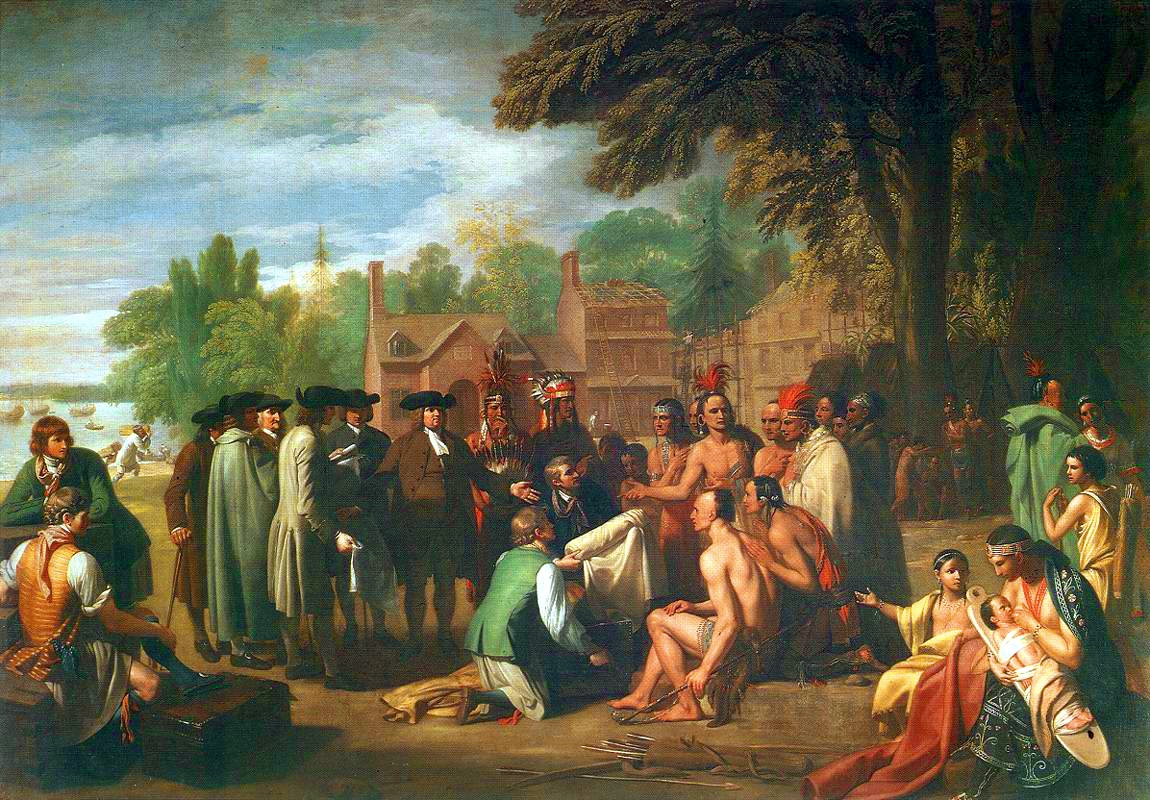
Researching games from the 1600's in the United States is difficult because the Declaration of Independence was not signed until the late 1700's. Consequently, 17th Century Native American and European toys and games will be discussed instead.

One popular Native American Indian game was the bowl and dice game. The bowl and dice game has three separate phases. The object of the game is to win more sticks than any other player. Arguably, this could be considered a game that catches the essence of gathering materials for survival. However, its primary purpose seems more like an original means of having fun.

In the UK, children played with dolls and they played skittles. Children did not have nearly as many luxuries as kids do today. The majority of children in the 1700's had to rely on their own imaginations and didn't have toys.

As it was stated in the 1700's Games blog, dolls do capture an essence of real-life experience, but skittles does not.

The fact that children were being creative and thinking of ways to have fun seems original. However, it is hard to distinguish imaginative games as an essence of life experience or not. The children could have been playing house or pretending to play school, but they also could been creating games such as "freeze-tag"as well.

The 17th Century is certainly different from the 18th and 19th century. It will be interesting to see how it also differs from the 20th century and see whether or not it is an outlier in the experience and time correlation or not.

Painting 1
Painting 2


Monday, September 23, 2013

1800's Games

  "It might be that all games are silly. But then, so are humans." ~ Robert Lynd

     Most of the popular 18th century games were just as prominent in the 19th century as they were throughout the 1700's. Although it was still common to see games and toys such as pick-up sticks, the yo-yo, dominoes, and cup and ball, the19th century did have their own innovations.

Toy guns, the rocking horse, the rolling hoop, Jacob's ladder, tops, game of graces, building blocks, and school house sets became popular in the 1800's.

There are far more games from the 19th century that capture the essence of a real-life experience. The only toy from the 18th century that really captured the essence of a life experience was the baby doll.

However, the toy guns, the rocking horse, the building blocks, and the school house set all imitate real experiences.

It is interesting to see how the popular games of each of these centuries has changed. Although I have only researched two centuries, I am certain that there is a positive correlation between popular games and their ability to capture the essence of real-life experiences and time.


9th Century Games
Quotation
Rocking Horse
Games of Graces

1700's Games

Benjamin Franklin once said, "We do not stop playing because we grow old, we grow old because we stop playing."

Originally, I had decided to research popular games starting in the1940s but Franklin has inspired me to go back to the early 1700s. Colonial American children played with games and toys such as marbles, skittles, cat in a cradle, ball in a cup, dominoes, checkers, hopscotch, jacks, jump rope, pick-up sticks and yo-yo.  Children would also play with stuffed dolls made of worn socks and play cards games such as solitaire.

The Art of Game design says that a good game does "Not need to perfectly replicate real experiences... [However it does] need to capture the essence of those experiences" (Schell 20). The early 1700's-games are interesting in that the only activity that actually replicates a real-life experience would be playing with dolls. Playing with dolls  captures the essence of parenthood. All of the other games are original experiences.

It will be interesting to find the century when the majority of popular games captures the essence of real experiences instead of original thinking.

Monday, September 2, 2013

Fun! Fun! Fun!

Game research might sound like an oxymoron to some people but not to game designers. "There is considerable research and literature in the area of user-centred design. . . A design process can be described as a process that combines information and logic" (Ermi and Mäyrä). Who ever thought to ponder the engineering behind Candyland?

Although the goal, here, is not to delve into the deep inter workings of mastermind game programming, I will be researching America's most popular game from every decade since the 1940's. 

I think it will be interesting to see how America's tastes have changed throughout time. I hope to see a correlation between America's political, economic, and social state in relationship to it's game preference. For example: was monopoly the most popular game in a decade when house marketing, personal finance, and investment hit a record breaking high?  It will also be interesting to consider whether the game was truly a byproduct of its time or if the game was marketed to lead revolutionary ideas throughout its golden decade. 


If there is enough time, it would also be interesting to predict America's next favorite game based on the research gathered and hypothesize as to what kind of game would be the most successful throughout the 2020's.

Ermi and Mäyrä: Game Studies Link
Monopoly: Photo Link